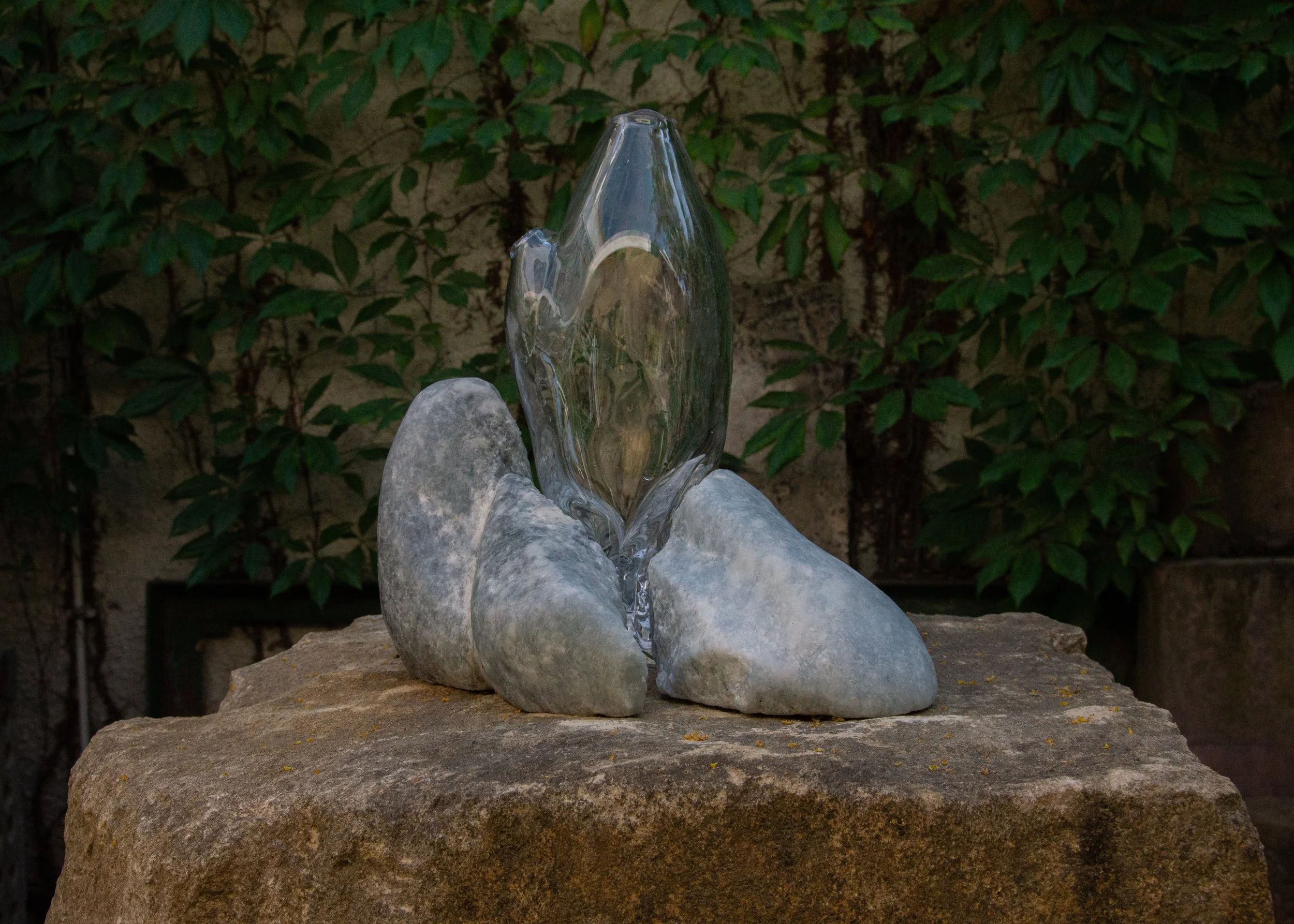
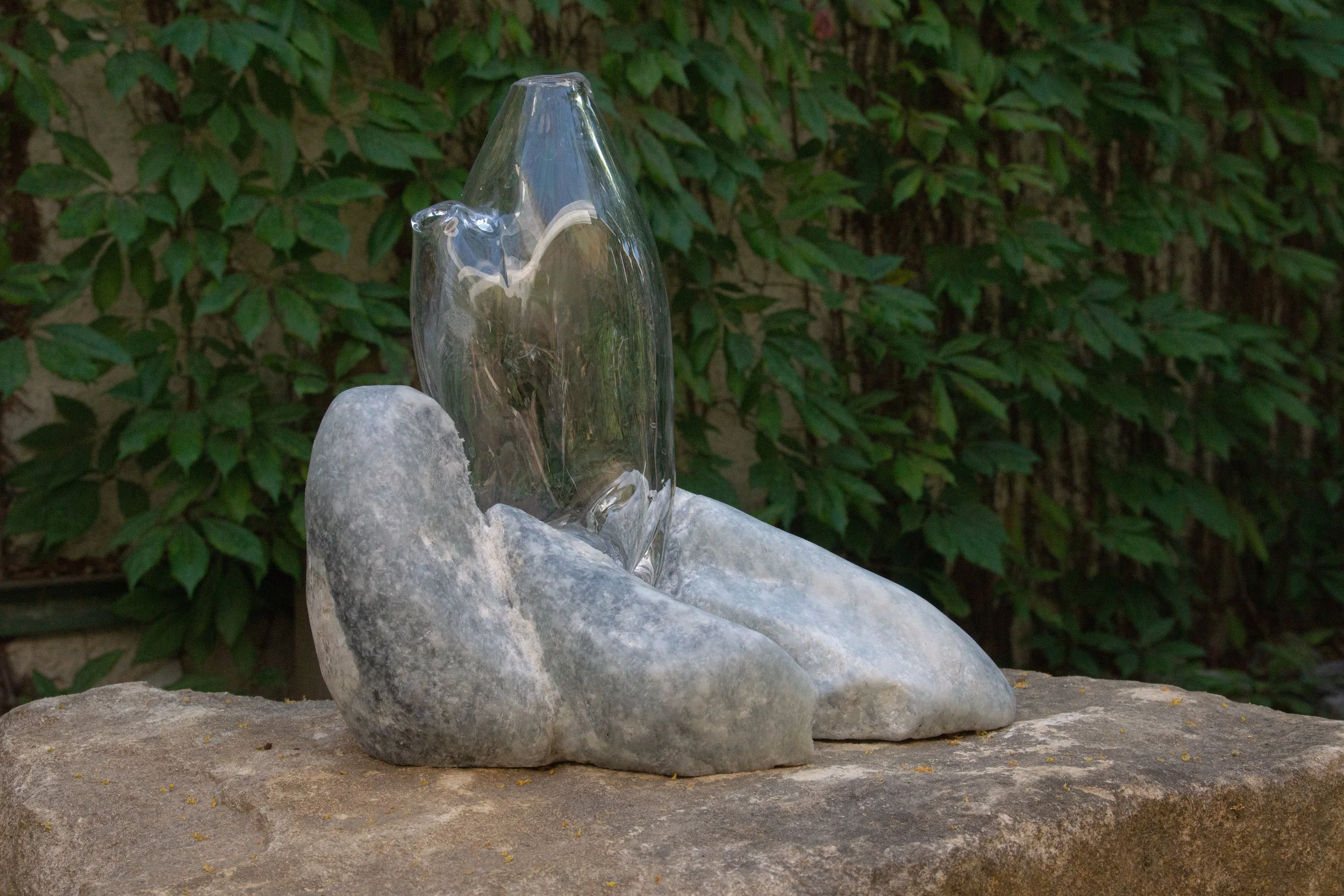
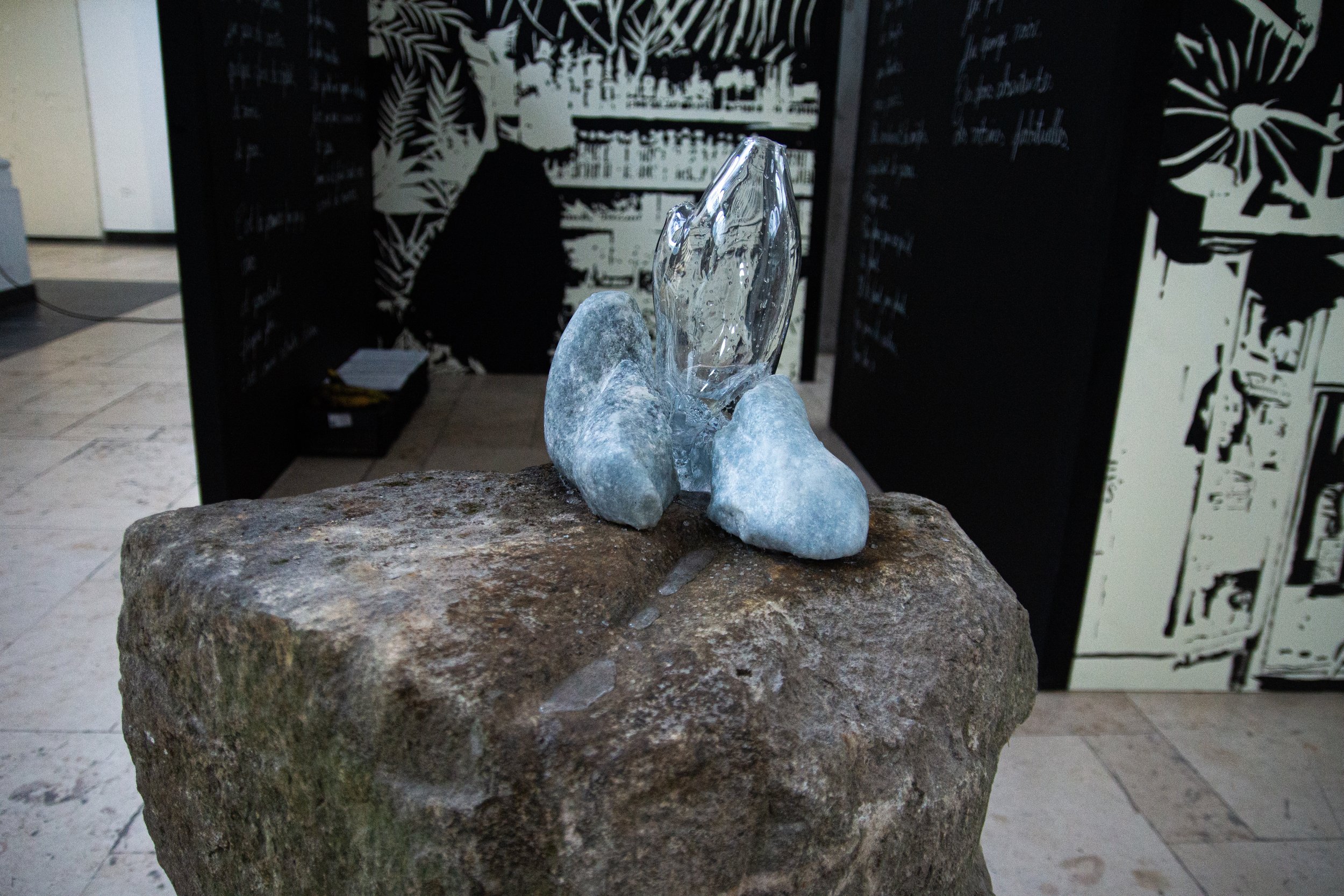
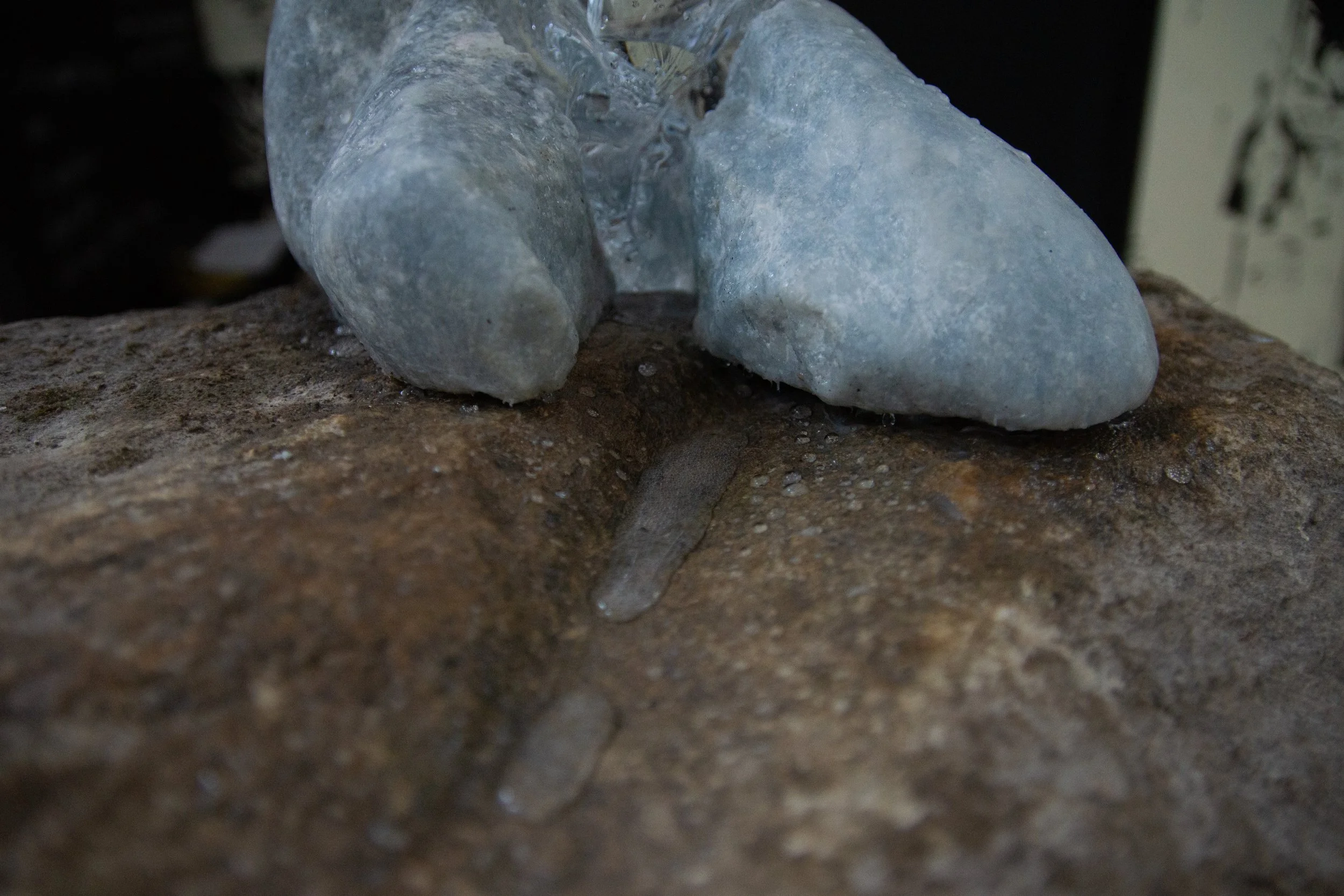
Ymir’s Armpit is part of the work “Flesh to Soil”.
Myths exist in multiple versions simultaneously, have no fixed origin, and belong to no one and to everyone at the same time. As living, constantly changing cultural mirrors, myths are deeply honest and speak of the desires, fears, and wishes of the person telling them. As a collective process, they are the product of encounters, exchange, and transmission across generations, cultures, and identities. Myths reveal ways of thinking from past times and allow us to compare them with the present. From a queer perspective in particular, myths demonstrate that our contemporary concepts of gender, sex, and identity are neither universal nor ahistorical.
But what happens when certain narratives are omitted, rewritten, or completely erased over the course of transmission? Who tells these stories? Which voices are preserved, and which disappear? Flesh to Soil addresses these violent rewritings of mythological narratives through a queer reading of a figure from Norse mythology: Ymir. Ymir is described as genderless or intersex and created life asexually through bodily fluids, yet is most often represented as male.
These traditions are not a neutral archive, as the few surviving written sources were shaped by the Christianization of Scandinavia in the tenth and eleventh centuries and reflect Christian patriarchal values that rendered queer aspects invisible or erased them entirely. Flesh to Soil understands itself as a retelling that emphasizes those aspects of Ymir that challenge contemporary gender binaries and gender essentialism, while seeking to reclaim their queer dimensions. By making queer origins visible, the work creates a poetic and material archive against forgetting.